1
/
of
1
Sun Dental XGate Dental Panther Polymer Kit - Geçici & Daimi Kompozitlerin Cilası ve Parlatılması
Sun Dental XGate Dental Panther Polymer Kit - Geçici & Daimi Kompozitlerin Cilası ve Parlatılması
Regular price
$ 176.00 USD
Regular price
Sale price
$ 176.00 USD
Unit price
/
per
Taxes included.
Couldn't load pickup availability
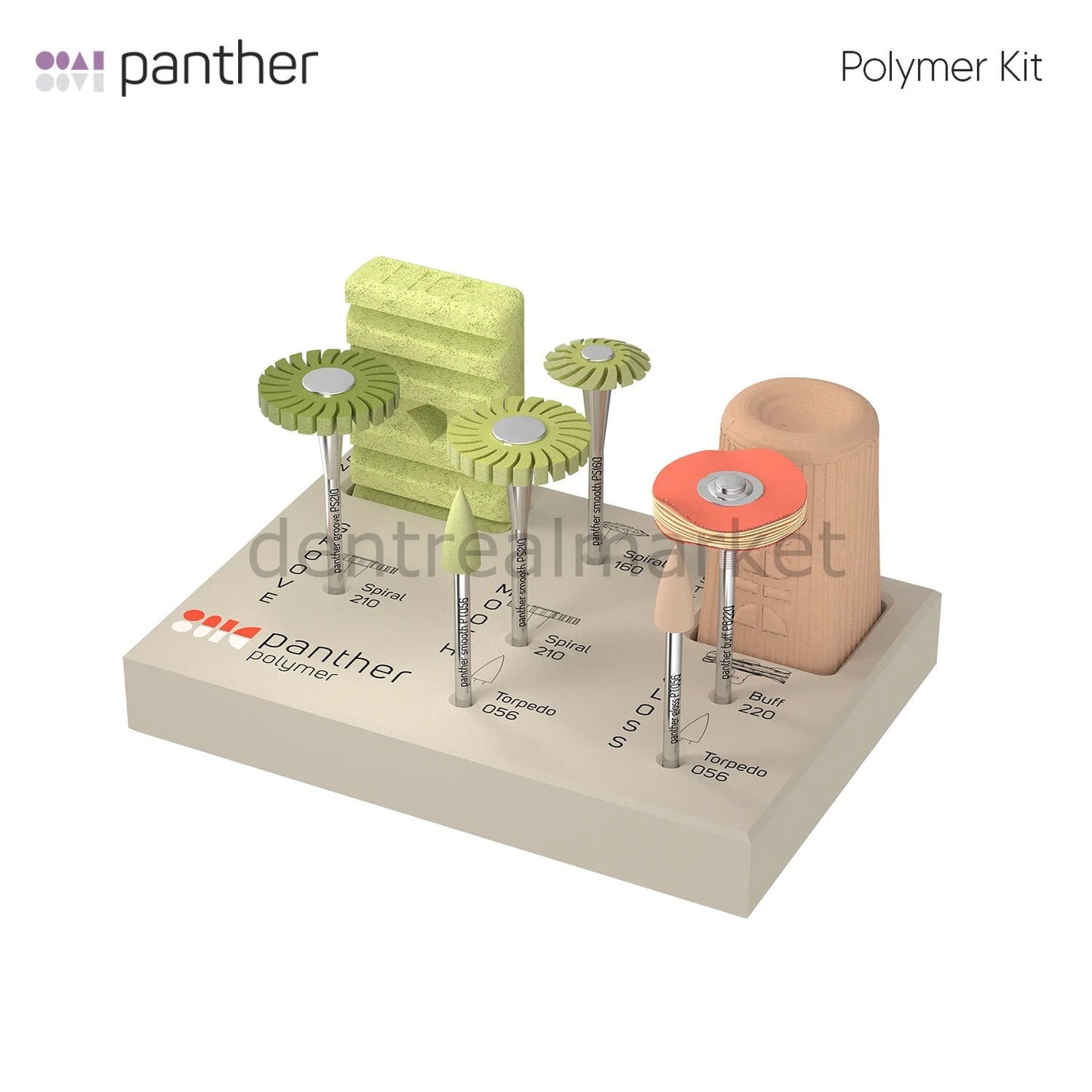
Application steps — detailed description
This first step is especially critical for CAD/CAM-produced polymers.
1. Initial surface preparation / routine cleaning and groove removal
Product: Panther Groove PS210
- Purpose: Used to remove channels, grooves, and marks that form on milled or 3D-printed surfaces.
- Structure: Lamella disc and special compound material
- Goal: Initial coarse surface correction.
- Speed: 7000–12000 rpm
2. Intermediate smoothing / micro-level evenness
Product: Panther Smooth PS160 or PS210
- Purpose: Smooth the surface to prepare it for polishing.
- Structure: Sharp and soft lamella structure that conforms to hard-to-reach areas.
- Goal: Remove micro-irregularities on the surface.
- Speed: 7000–12000 rpm
Especially effective on marginal lines and interdental areas.
3. Final preparation before high gloss
Product: Panther Smooth PT056
- Purpose: Brings the surface to its smoothest state immediately before polishing.
- Structure: Small diameter; can run at high speed
- Speed: 8000–20000 rpm
- Goal: Surface almost as smooth as glass
4. Polishing — high-gloss stage
Product: Panther Buff PB220 and Panther Paste 02 (used together)
- Purpose: Create a glossy, aesthetic surface
- Structure: Polishing brush + special paste
- Goal: Maximum gloss on polymer surfaces
- Speed: 7000–15000 rpm
Compatible with different polymer types. The paste strengthens the polishing effect without damaging the surface.
5. Instrument reshaping and maintenance
Product: Panther Tune 01
- Purpose: When Panther instruments lose their shape, restore them to ideal geometry with a diamond stone
- Goal: Extend instrument life and maintain sharpness and precision
General use notes
- All steps should be performed at low speeds. Otherwise both the instruments and the material being worked can be damaged.
- Work with a “less is more” principle: Controlled contact matters more than excess pressure.
- Progress step by step: Before moving to the next level, make sure the surface is ready.